
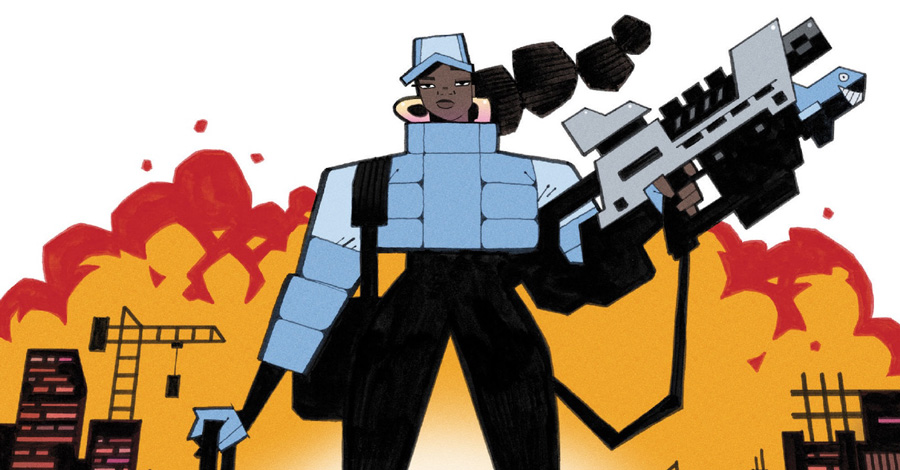
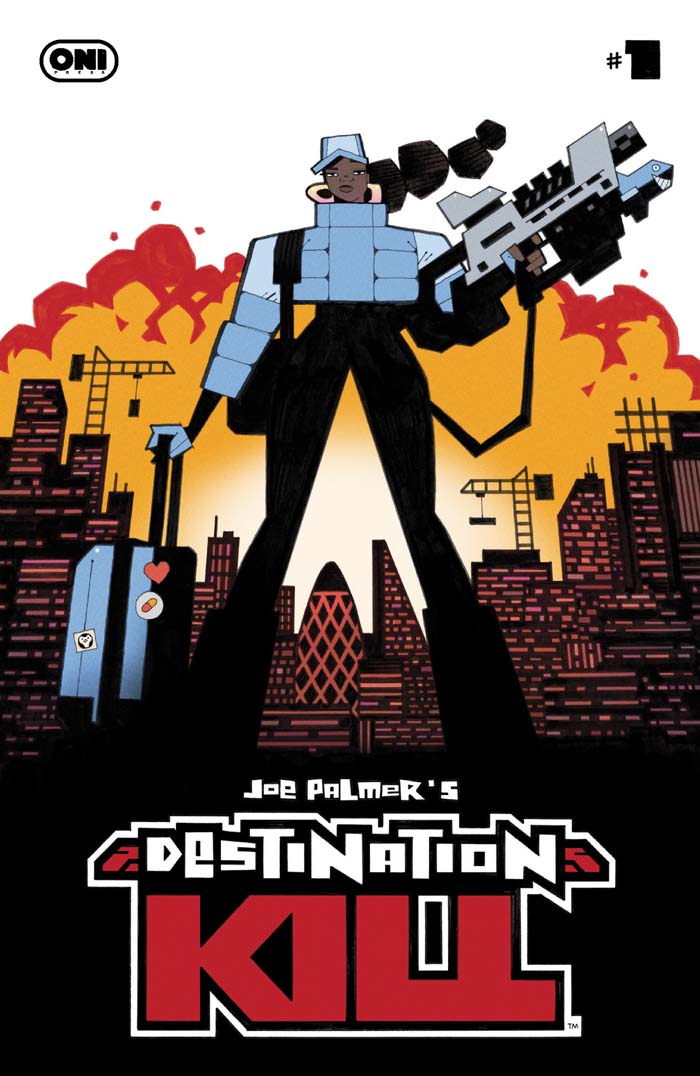
Joe Palmer had been carrying pieces of Destination Kill around in his head for years before he finally had the chance to put them all together. The British cartoonist, known for his work on 2000 AD, Time Before Time, Write it in Blood and more, spent that time accumulating ideas, characters and images that didn’t quite have a home yet, but found one in this new title that he’s writing and drawing.
The result arrives from Oni Press on May 13: a 40-page first issue set in 2125 London, where a superfast transatlantic train, a robot workforce and a citywide worker uprising collide. We talked about the genesis of the project, going solo and lettering your own comics, among other topics. My thanks for his time.
Before we dig into Destination Kill, can you walk us through how you got into comics in the first place? What was the book, the moment or the person that made you think, “This is what I want to do?”
It’s something I wanted to do from a really young age. When I was a kid, the art in comics captured my imagination, and I always assumed that I’d end up doing it myself. I resisted putting in the work for a while, but the thought of doing anything else other than art with my life proved to be motivation enough to try and make it happen.

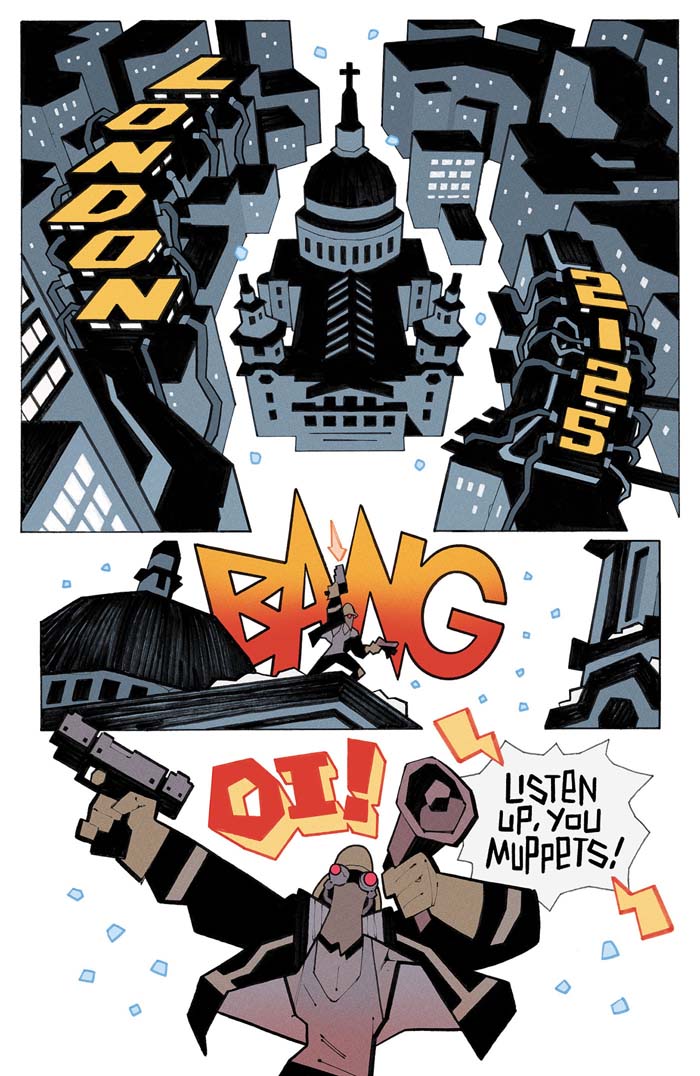
You’ve described the book starting from a single image: a masked builder on the roof of St. Paul’s. How did you go from one striking image to building out a full story?
That visual of the builder on the roof was definitely a part of the origin of the book, but the story itself was an amalgamation of lots of ideas that had been swirling around my head for years. I had no idea that I’d end up using some of the things I had in my head, but as I began to write, it became clear that I could slot certain things in and they’d fit well into this story. As an example, I’d originally wanted to have the private detective character that ended up becoming ‘Lance’ in Destination Kill in another project, but it ended up working better in this one. I was throwing a lot of my ideas into this book, just in case it turned out to be the only thing I ever got to write and draw myself!
This is your first project where you have total creative control. What surprised you most about that experience compared to your collaborative work?
I don’t think that anything necessarily surprised me, I was so ready to do my own thing, but there are lessons to be learned from everything. It is lonely sometimes, working completely by yourself!
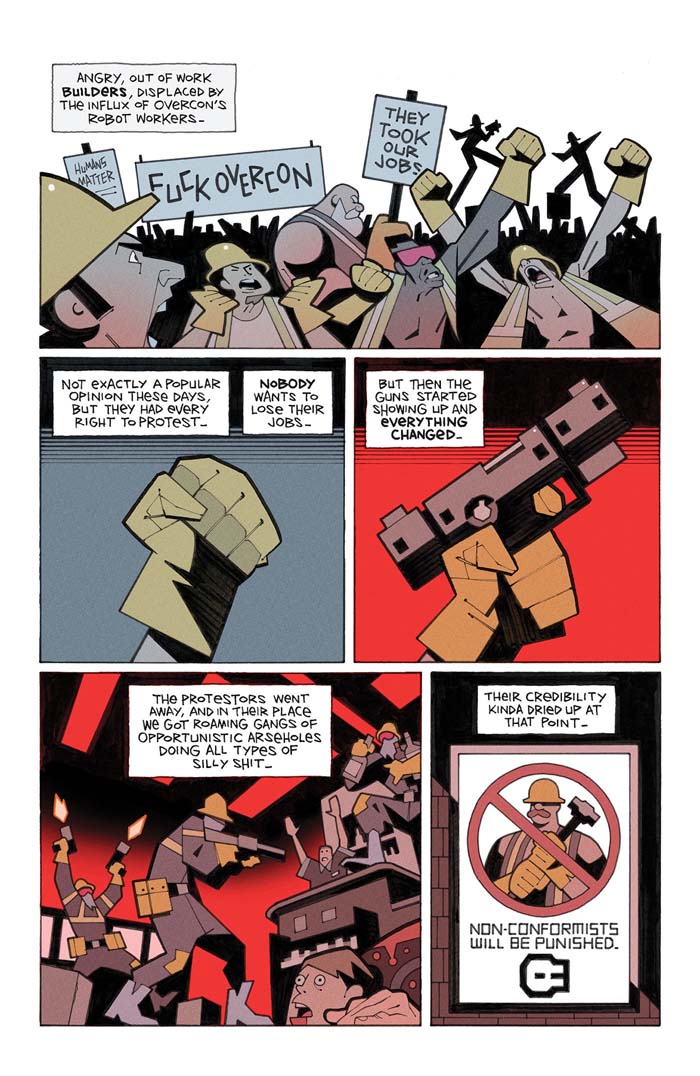
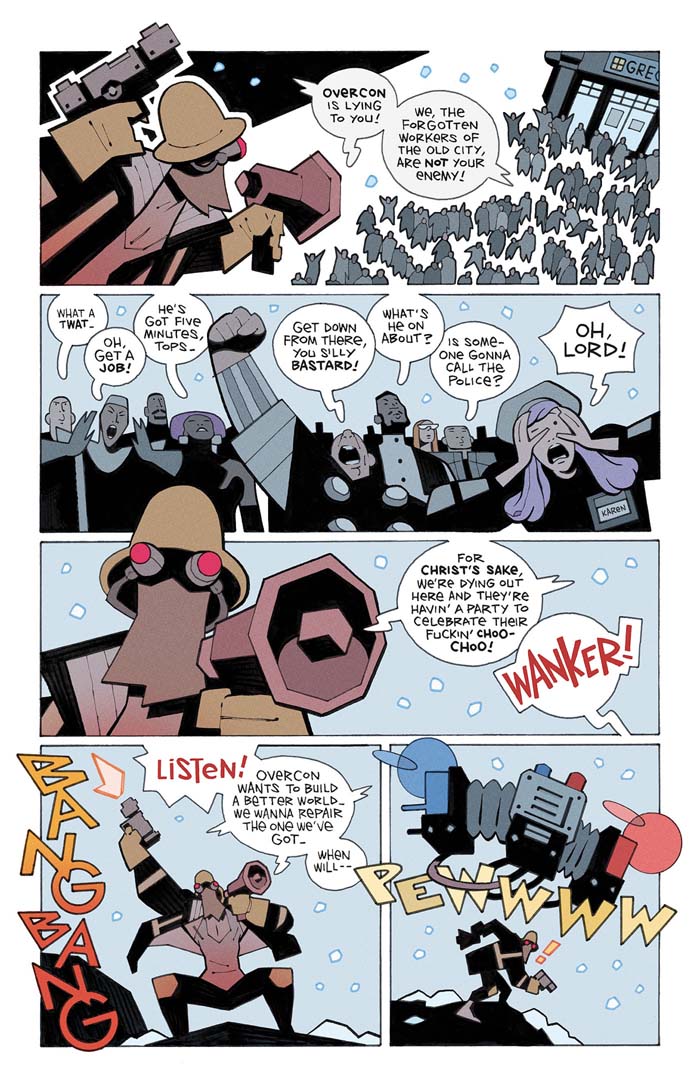
Overcon and its robot workforce displacing human workers feels very of-the-moment. How does it parallel what’s happening right now with AI and automation?
The core idea of displacing human workers is unfortunately very relevant, but I think the way that I presented it in Destination Kill is pretty far from what is going on in the real world. It’s so much fun to depict humanoid robot characters, but I would be very surprised if we ever go that way. The fact that human beings’ lives and livelihoods are secondary to industrial efficiency is the real issue, and until that is addressed, corporations will continue to use whatever methods they feel are necessary to drive profits.
What can you tell us about Gina Serene?
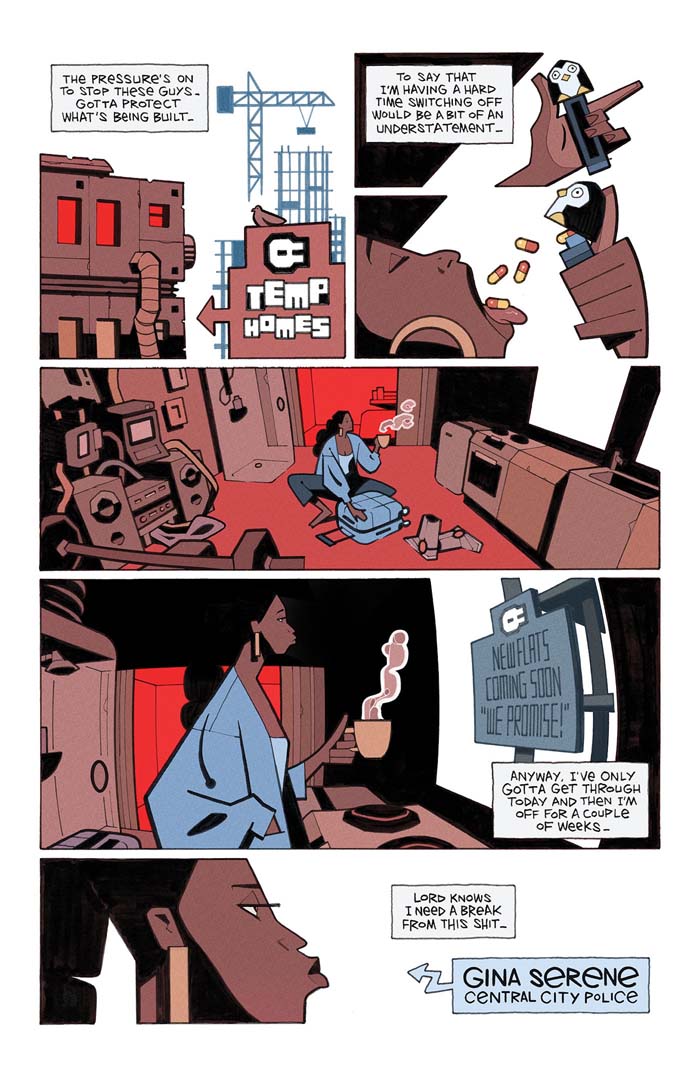
Well, Gina is the lead of the story, and she’s a stressed-out police officer who is in charge of the builder case. She’s hoping that a vacation will alleviate some of her problems, but of course that doesn’t go to plan. She’s tough, resourceful, and just trying to survive in a world that is growing in complexity.
What does lettering your own work give you that working with a separate letterer wouldn’t?
This is such a multi-layered question for me, as I have so many thoughts on it, but essentially lettering is one of the most important aspects in comics, and I want control over how it’s done!
I’m a huge admirer of European comics, and in France and Belgium in particular, the artists usually letter themselves. There’s so much personality in hand-lettering; it’s very much another lane for the artist to add a little bit more of yourself into the work. And whilst it is a ton of extra work, it’s extremely rewarding!
Now that you’ve gone fully solo, is this a mode you want to stay in, or do you miss the creative back-and-forth of collaboration?
Right now I’m having so much fun doing my own thing, but honestly it’ll come down to finances. If I can afford it, I’ll continue to work on my stuff.
2 thoughts on “Smash Pages Q&A | Joe Palmer on ‘Destination Kill’”