
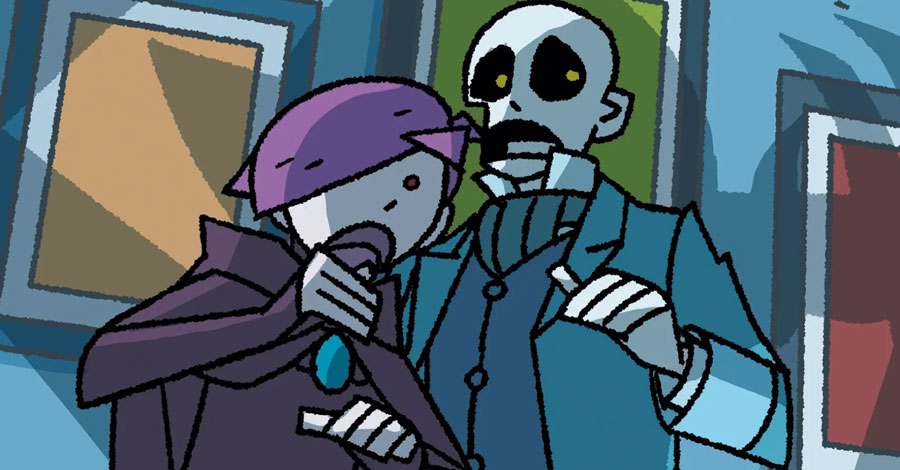
Over the course of 30 years, Matthew Dow Smith has built a career that has taken him everywhere from Hellboy and The X-Files to DC and Marvel. But in recent years, the writer and artist has been able to work, as he says, “with the training wheels off,” embracing middle-grade and young adult graphic novels that better reflect the kinds of stories he’s always wanted to tell.
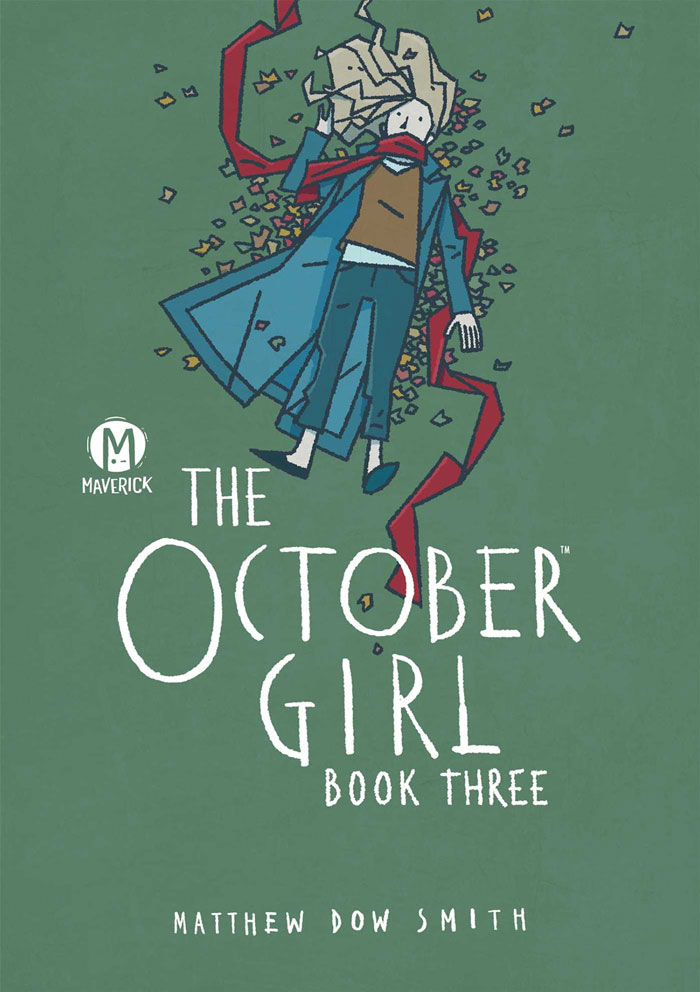
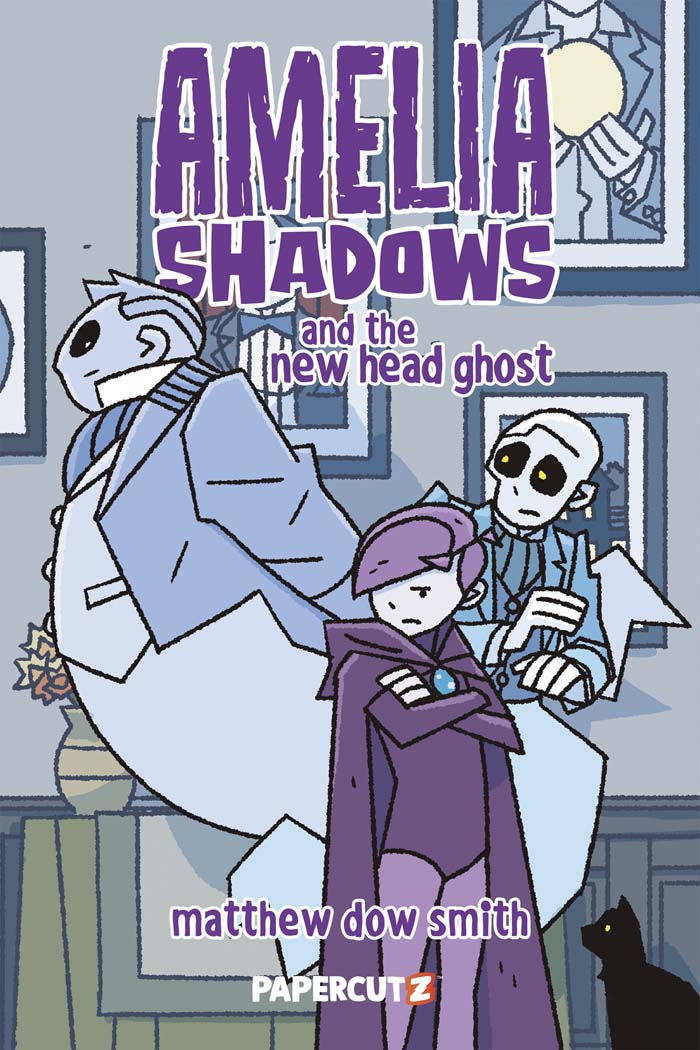
That creative shift has resulted in two growing fantasy series arriving just months apart. Amelia Shadows and the Monster in the Box debuted this week from Papercutz, continuing the adventures of the curious young heroine. Meanwhile, The October Girl Book Three arrives from Mad Cave’s Maverick imprint (in October, naturally), which expands the mythology of the supernatural world Smith has been developing for decades. I caught up with him to discuss both series, how all-ages comics unlocked a new level of creativity for him and how finding the right audience has transformed his career.
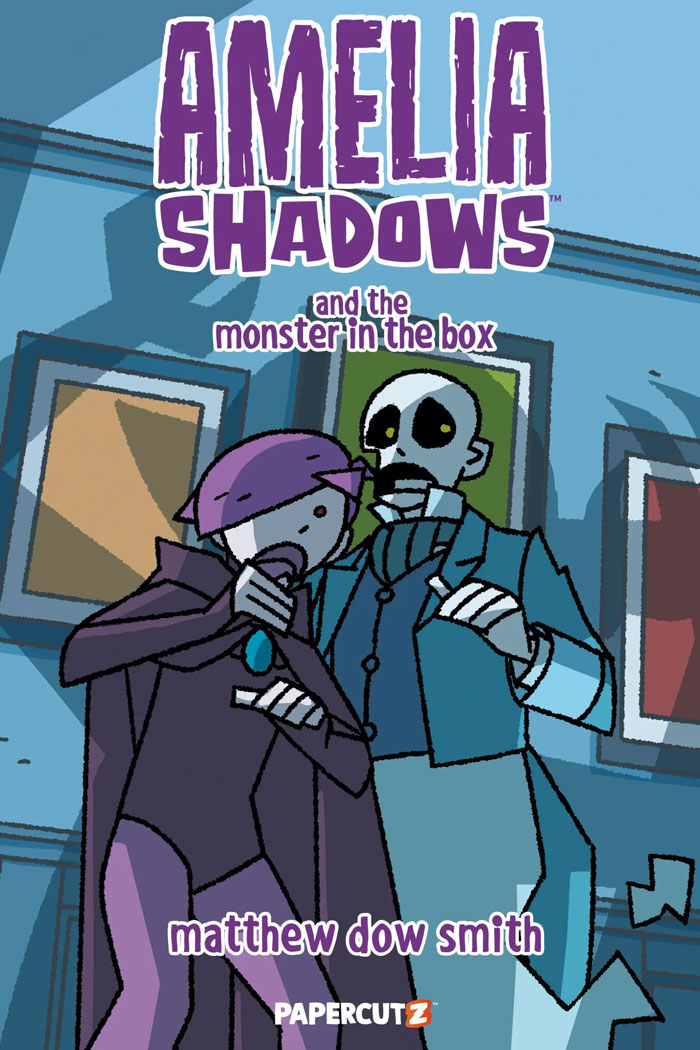
Your newest Amelia Shadows book was just released this week, coming a couple months before October Girl returns. Was it fun bouncing between those two worlds, or did you have to consciously keep their voices separate?
They’re very different projects for very different audiences, but in a lot of ways they’re both kind of about the same thing — young people trying to find their own path while dealing with other peoples’ expectations. But the Amelia books have more jokes in them. Both characters have such strong voices and views in my head that I haven’t had much trouble tapping into them when I switch between projects, but I did learn that if you’re going to be working on two series at the same time, do not give the main characters names that start with the same letter. The number of times I’ve swapped Autumn’s name for Amelia’s, and vice verse, in outlines and blurbs and things is way more than I want to admit to. Luckily I haven’t done it in the actual books. Yet.
How much of those worlds have you mapped out beyond what readers have seen so far?
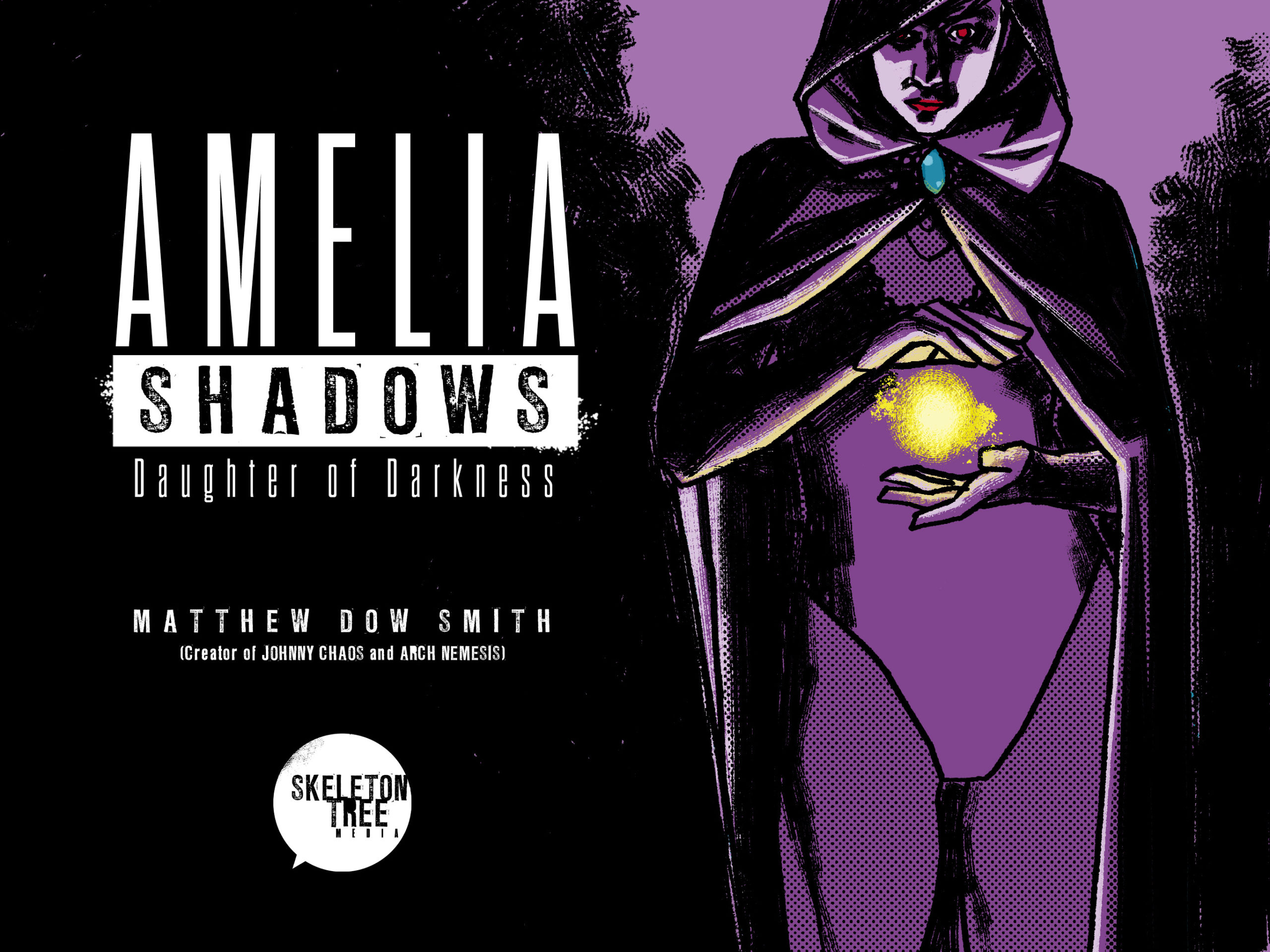
Well, The October Girl is an idea that I’ve been dreaming about since college almost 35 years ago now, so that world is mapped out in an insane amount of detail, though the audience has only seen the barest sliver of it in the books so far. I intentionally created a world and a mythology where I could do pretty much any kind of story that I would ever want to do, but for now, The October Girl is told entirely from Autumn’s perspective so we only see what she sees, though I designed everything so that she sees more and more with each book.
As for Amelia, that project actually grew from a series of stories I did on social media during the COVID pandemic. There’s a whole superhero universe that she’s a part of, but the stories mainly take place in her father’s mansion, and we only see glimpses of the world outside when it intrudes into her bubble. It’s out there, but you rarely see it. At least, until a superhero shows up looking for her dad.
Speaking of which, the new Amelia book centers on one very relatable mistake: “Don’t open the mysterious box”…and of course she does. Why do you think stories about “don’t touch that” items never get old?
It’s that eternal human impulse, you know? Goes back to the dawn of human civilization. We just can’t resist wanting to open a box. Especially if someone tells us not to. And we’ve created a whole genre of stories beginning with Pandora’s box to teach people that maybe that’s a bad idea, but we’re gonna’ keep doing it anyways. We just can’t help it. And as long as we have that impulse, there are always going to be stories about opening the box you aren’t supposed to.
Without spoiling anything, what new aspect of the Night World were you most excited for readers to finally see in the third October Girl?
My very first attempts at turning all the ideas that became The October Girl into an actual story revolved almost entirely around the Night World. It’s a key part of the whole mythology and has all of the visual ideas that made me want to do something in this world in the first place, so for Autumn — and the audience — to finally see it is really exciting for me. Of course, they’ve already seen it, they just don’t realize it, yet. One thing about getting to work on a series like this over so many volumes is getting to set so many things up in earlier books and this one involves a lot of seeds I’ve been planting in the story from the very beginning.
You’ve worked on everything from Hellboy and X-Files to middle-grade graphic novels. Does writing for younger readers change the kinds of stories you tell, or just how you tell them?
One of the things I was always being told by editors was, “Can we get some more blood and guts in here?” or “Can you make this sexier?” My sensibilities have always been more all-ages than most mainstream direct market comics are aiming for, so in a funny way, I changed what I did way more for projects like The X-Files and even DC’s Day of Judgment back in the day than what I’m doing now. Stories like The October Girl were the kinds of things I wanted to do when I was first breaking in but there was never really a space for them in mainstream comics. Now with the explosion of young adult, middle grade and early reader comics, I feel like I can just make the kind of comics I make without having to change anything. Or add blood. Or skimpier outfits.
Because you’re both writer and artist, there’s no gap between what you imagine and what ends up on the page. Does that make the process easier, or does it mean you end up endlessly revising yourself?
Whenever I talk about my creative process, my editors break out into a cold sweat. I don’t write scripts, I don’t write an outline, I don’t really preplan much of anything in a book. I’ll have a starting point for a story and some vague idea of where it might go and just sit down and start laying out pages, writing the dialogue as I go, finding the story as I tell it on the page.
Seriously, I’m sure my editors have nightmares about it, but it’s such a fun way to work. I’m literally telling myself the story and then sharing it with the reader, with a very stressed out editor in between. And it’s a very fast process, so if I hit a dead end or feel like something isn’t working, it’s not a big deal for me to go back, toss out a few pages and then start off again on a slightly different path. I’ve only had to do that a few times, though.
For the most part, the story just tells itself exactly the way it wants to and I’m only along for the ride. I will occasionally go back in and tweak a moment here or there if it isn’t working as well as it should or if my editor sees something in it that I don’t, but that’s pretty rare, too. Mostly it’s just rewriting dialogue here or there for clarity.
You’ve now got two fantasy universes growing alongside each other. Do you already know where both series are ultimately headed, and how many volumes you’d like to do of each?
Having just said how little preplanning I do for my projects, I do have to admit that The October Girl series is pretty well mapped out at this point. As supportive as my publisher is, they did need me to have an actual plan before they could commit to the full series. That being said, while the overall arc is set, I’ve left a lot of the rest of the story pretty open. There are major plot moments I know are coming, and some major character moments, but for the most part I won’t know the story until I sit down and start telling it. Amelia Shadows is a little less set in stone. I’ve done eight books so far, and we’re in the middle of publishing the first four of those. Hopefully they sell well enough to be able to publish the other four and, dream of dreams, maybe even continue the series beyond that. I’ve got so many Amelia stories I’d love to tell if the audience is there for them. I do know how it all is going to end, but I’m hoping to do a lot more books with her before we get there.
You seem to have hit a creative and productive high point in the last few years, with multiple graphic novels across these two series, plus the recent Misfits of Magic book for DC. Do you feel like that’s true, and what would you attribute it to — if that’s even how you think about it?
As I’ve said a few times online, it really feels like I’m working with the training wheels off for the first time in my career. I consider myself incredibly lucky to have been able to work on the incredible books I’ve gotten to do over the last several decades, but I always felt a bit like a round peg trying to fit itself into a square hole. Mainstream direct market American comics are a very specific kind of beast and I never really felt like I fit in with what was going on at any given time. My art was always a little too weird and my stories were always a little too gentle for what the majority of comic book readers seemed to want. My work was too superhero-y for indie comics, but not superhero-y enough for mainstream comics. It was a very weird place to be coming from and to be trying to make a living as a comic book creator.
It finally got to the point where I just sort of broke. I didn’t really want to make comics anymore. At least, not like that. My agent had been saying for years that I should try my hand at doing something for kids, and I finally just kind of caved and began playing around with some ideas and, suddenly… BOOM. It was like being completely unleashed. My head was filled with ideas and I was generating page after page after page. I went from struggling to finish anything to churning out 4, 5, 6, sometimes 10 pages a day. And I’ve been going flat out ever since, and it’s been pure fun the whole time. More than 30 years making comics and it took me this long to figure out what I’m actually pretty good at, much to my annoyance, because it means my agent gets to hold it over my head for the rest of my career.
One thought on “Smash Pages Q&A | Matthew Dow Smith on ‘Amelia Shadows’ + ‘The October Girl’”