
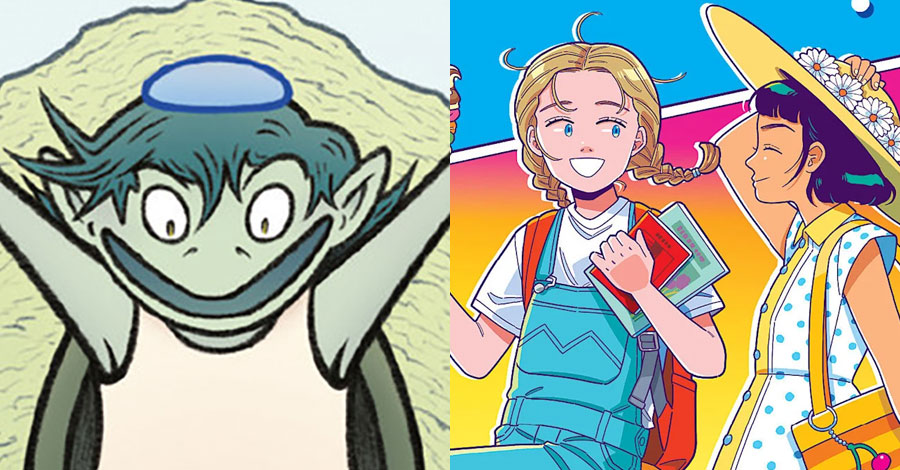
We’re happy to continue our interview series with creators speaking at the monthly Picture + Panel event in Boston, which brings together two comic creators to talk about a specific topic. This time we have Abby Denson and Matthew Loux joining us to talk about Japan.
Omega Au, convention chair of Anime Boston 2026, will host a conversation with Loux and Denson tonight at 7 p.m. Eastern at the Boston Figurative Arts Center in Somerville, Massachusetts. The event is brought to you by the Boston Comic Arts Foundation, Porter Square Books and the Boston Figurative Arts Center.

Abby Denson is the author of Uniquely Japan; the Kitty Sweet Tooth books, illustrated by Utomaru; Cool Tokyo Guide; Cool Japan Guide; Dolltopia; and Tough Love. She has written for comics series such as The Powerpuff Girls, The Simpsons, Sabrina the Teenage Witch and The Amazing Spider-Man Family. Her work has garnered the International Manga Award, Moonbeam Children’s Book Award and the IPPY Award. Abby has taught and lectured at various venues, including the Museum of Comic and Cartoon Art, The New School and Sophia University in Tokyo. Abby goes to Japan whenever she gets the chance.
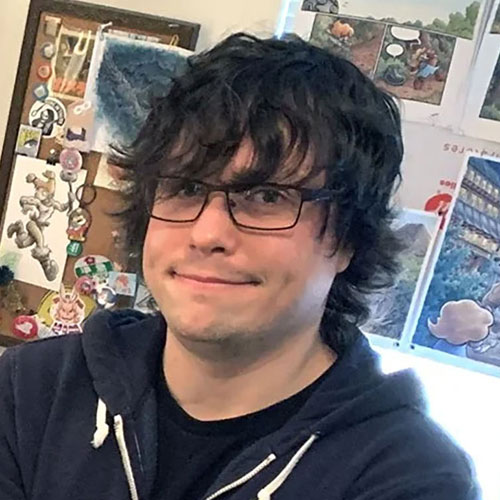
Matthew Loux is author and artist of the graphic novels The Time Museum Vol. 1, published by First Second Books; Sidescrollers; and the five volume series Salt Water Taffy, originally published by Oni Press. Matthew has also illustrated the graphic novels F-Stop and Good Night Gabbaland, and has contributed cover artwork for the Comic Book Legal Defense Fund. Matthew resides in New York.
Big thanks as always to Gina Gagliano and Jason Viola, who organize the monthly series in Boston and brought this Q&A series to Smash Pages.

How did you become interested in Japan?
Matthew: I was first interested in Japan when a high school friend got me into ’90s anime. Back then there wasn’t nearly as much available and what we did have was either very expensive or we rented from our local comic shop (VHS tapes btw) and we made copies. One other outlet was to make a day trip into Manhattan from easter CT, go to China Town and buy bootleg copies of different unavailable shows. My interest plateaued until Abby and I started visiting Japan in the twenty-teens. Being there and experiencing it as a real place exploded my interest in all aspects of their culture.
Abby: When I was little, my mother worked for a Japanese corporation, and she got to go on a trip to Japan for work. She brought us back souvenirs and taught us how to use chopsticks and eat sushi, and we enjoyed these things very much.
Then, as I became interested in reading and creating my own comics as a young adult, I was fascinated by Rumiko Takahashi and other female mangaka and the women’s comic culture in Japan, which compared to the US comics scene in the 1990s, was so much more expansive.
Why did you start making comics about Japan?
Abby: I was drawing comics about desserts for my dessert blog and making short autobio comic zines about food and travel. Since I was traveling to Japan fairly often, it kind of naturally happened.
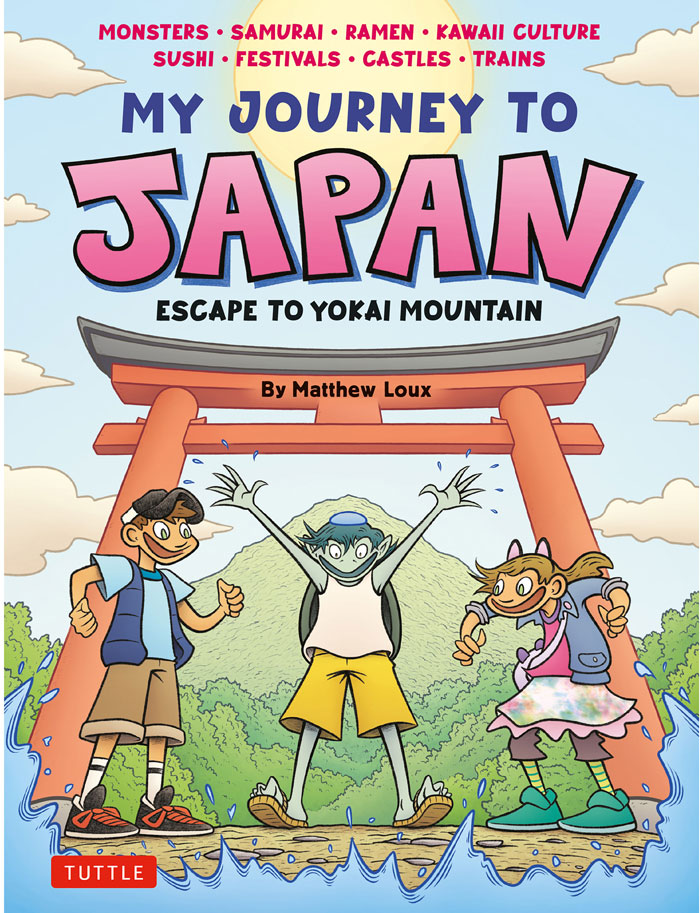
Matthew: My first comic about Japan was a self-published mini called Junrei Japan (Junrei means pilgrimage). This short story followed our real life experience visiting the famous Fushimi Inari shrine in Kyoto, the shrine with thousands and thousands of red tori gates trailing up a mountain, only in this visit we arrived at night which made it a very unique and atmospheric experience. I did this comic to both practice painting and prepare for a much bigger project, but also to capture the feel of our experience. In My Journey to Japan, I created a fun and energetic story to both appeal to a kids interest in Japanese cultural topics, but to also match the energy, goofiness, and pure excitement kids can have for what they love.
How is Japan integrated into your work?
Matthew: We’ve traveled to Japan over 10 times, and each time we try to visit at least one new town or area. Japan has very unique landscapes and city scapes and I think there are aspects of their hills and levels, both natural and city/urban that I incorporate into all my comic setting designs. This also comes from parts of New England where I grew up.
Abby: Starting out, I was heavily influenced by Rumiko Takahashi and Keith Haring in my own work. Seeing how many topics and genres manga covered really inspired me too. I had learned a lot from Frederik L. Schodt’s book Manga! Manga! The World of Japanese Comics. I found that book in my college library, and it was eye-opening!I’m also continually inspired by my experiences traveling to Japan and my friends in Japan.
What’s your favorite thing about Japan?
Abby: The richness of imagination that brought the world so many brilliant manga, anime, and video games truly is astounding. The many wonderful people I’ve met and get to collaborate with. And of course, I also love the food and natural beauty!
Matthew: The art, the history and historic arts and crafts unique to Japan, the artist I’ve met on our travels, and of course the food. The best food I’ve ever had has been in Japan and all over too.
What’s your least favorite thing about Japan?
Matthew: From a travelers perspective, the amount of smoking that is still prevalent in many places and restaurants, though it’s not as bad as it used to be. But from a culture point of view, Japans politics and some laws are very regressive regarding LGBTQ rights, woman’s equality and immigration. Sounds familiar I know, but as much as I love Japan and their culture, it’s important not to pretend things are perfect there.
Abby: Personally, as a non-smoker, I find the indoor smoking in many restaurants is pretty tough to handle.On a broader level: rigid social expectations, xenophobia, and sexism. (These are low on my list about the US too!)
What misconceptions have you found people have about Japan?
Abby: I think people are quick to take a rosy view of what Japan is like, but they don’t realize that it has a lot of negative sides and serious problems, just like any other country.
Another thing is there had been the presumption that Japan is expensive, but since the exchange rate has been favorable to the US for a while now, I think that’s not the truth as much. One more thing is that tourists sometimes treat Japanese cities like a playground, and are not respectful. When being a tourist anywhere it’s important to be respectful, and self-aware of how what you do affects others around you (who are just trying to go about their everyday lives).
Matthew: That it’s the land of heightened technology. There might have been a time when this was true, but for the most part nowadays, Japan is on par with everywhere else, or in some cases behind the rest of the world. One example I remember from our early trips in the twenty-teens when wifi was everywhere in the US, it was only just beginning to show up here and there in Tokyo and hotels still had hard wire internet cables to use with a laptop. And many places still appreciate and maintain their retro tech, such as old trains, which is something I really like, actually.
Are there other media about Japan/Japanese media that have inspired your work?
Abby: NHK World‘s shows like Manben, Trails to Oishii Tokyo and the Japanology series. The film Tokyo Pop.
Matthew: I am a massive fan of NHK World. There are so many shows on it that gives you a view into Japans traditions, their contemporary issues and topics, and different parts of the country and how they live.
If you could recommend one other graphic novel about Japan/Japanese graphic novel to people who love your work, what would it be (and why)?
Matthew: Onibi by Atilier Sento. It’s a beautifully illustrated story inspired by their travels to Japan and is all hand painted.
Abby: Junji Ito’s Cat Diary. It’s just a delightful book about Junji Ito and his cats!