

Katie Skelly has spent more than a decade creating stylish graphic novels centered on unforgettable women navigating worlds of horror, desire and mystery. From My Pretty Vampire and Operation Margarine to Nurse Nurse, Skelly has developed a visual style all her own, blending cute images with bold colors, emotional honesty and, at times, brutal violence.

Her latest graphic novel, Heaven, is her first in about six years, following 2020’s Maids. It arrives in stores today courtesy of Fantagraphics. The supernatural strip joint story follows Dolly, a young woman searching for purpose who is drawn to “Heaven,” a mysterious club on the outskirts of town.
Combining supernatural horror with themes of identity and belonging, Heaven also marks the end of an era for Skelly. As she recently revealed, it’s the final story she’ll tell featuring the “cool girl” protagonists who have defined much of her work over the past decade.
I spoke with Skelly about the origins of Heaven and why this graphic novel felt like the right place to close one creative chapter before beginning another.
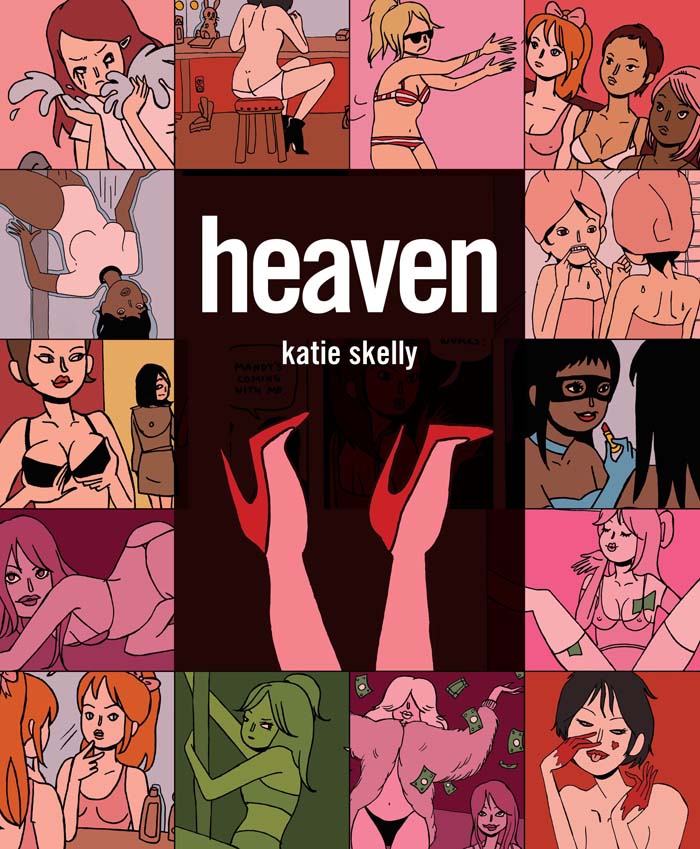
The title and setting of Heaven create an immediate contrast: a place called Heaven that’s a mysterious strip club somewhere out in the desert. What was the first image or idea that sparked this story?
Yes, that was what started the story in my mind, and I began building around it. The first place I arrived at after the concept was the club “Heaven’s Night” which makes a brief appearance in the game Silent Hill 2. I was also in the thick of the pandemic in New York at the time and mortality was screaming in my face, so the afterlife was on my mind. I wondered how I could create a place that operated between life and death and this was what I came up with.
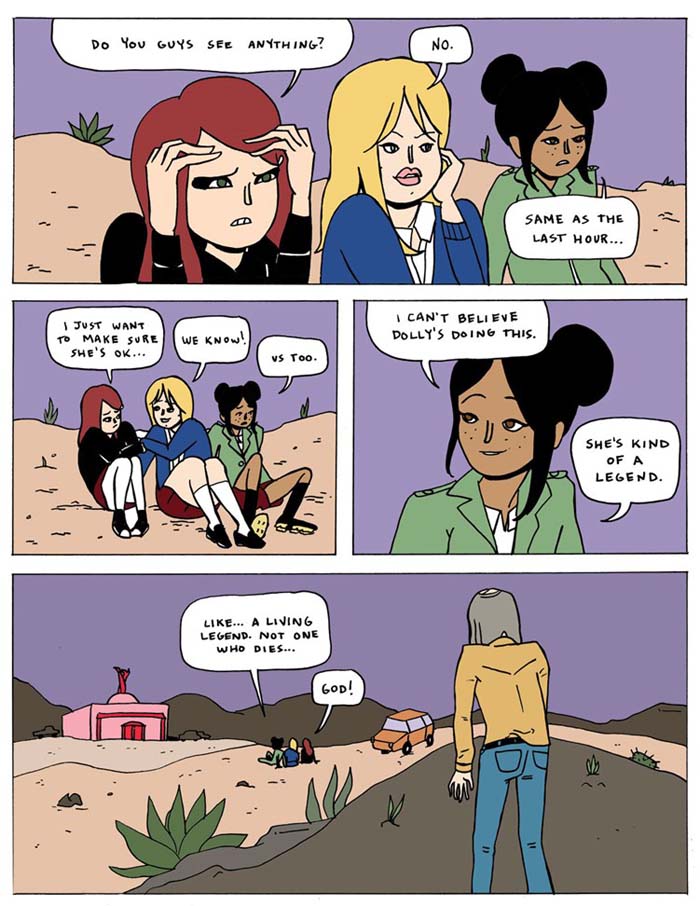
Your books often feel dreamlike, where emotion seems to matter more than literal explanation. Do you begin with a clear mythology for worlds like Heaven, or do you prefer to leave parts of the mystery unresolved, even for yourself?
I prefer to leave things mysterious because that tends to be the media that most resonates with me. I’ll make up some rules for myself, but I don’t necessarily have to communicate those rules in the story. Better to have fun along the way for me.
Many of your stories focus on young women who are often underestimated. What keeps drawing you back to those kinds of protagonists, and does this hold true for Heaven?
That was how I saw myself for a long time. I wanted to keep proving that they could survive and in a way prove to myself that I could too. In Heaven I’m looking at that mythology with a greater distance because I’m older now and have more stability. I ended up having more of a sympathetic eye towards these young characters than I anticipated, and decided to keep pushing on that feeling. In the end I think this story is more about figuring out how to fit into a particular ecosystem instead of burning it all down.
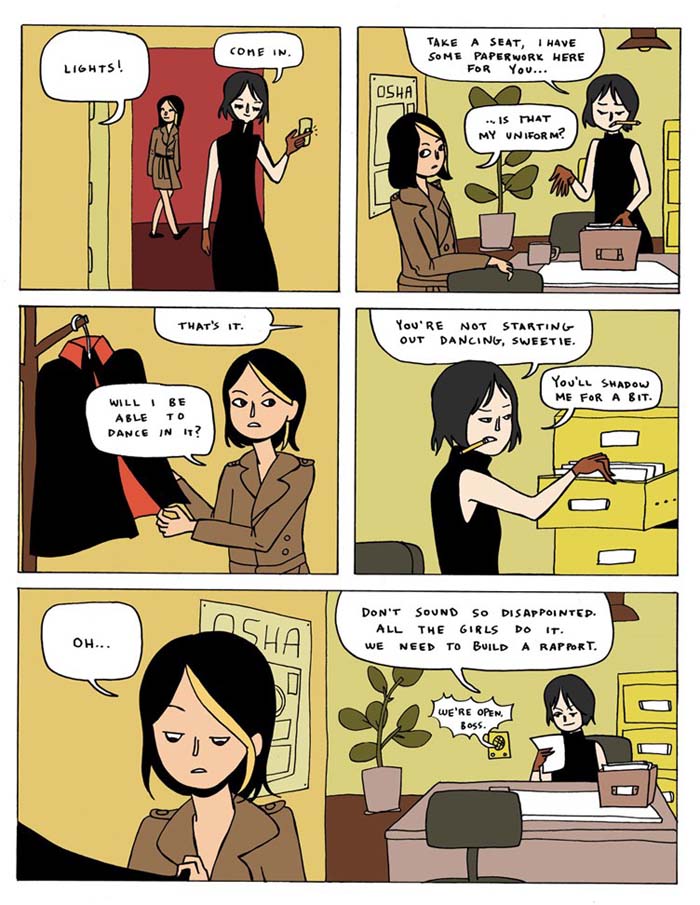
Your work has developed such a recognizable style over the years. Is that aesthetic something you’ve consciously refined, or did it emerge naturally as you kept making comics?
It emerged as I kept working. I have changed pens, changed line weight, worked in color, drawn on huge and tiny paper. I’ve practiced and tried imitating other cartoonists and made comics no one else will ever see just to learn. Making comics has been my art school. The one thing I’ve always kept is those noses. I just think they’re cute.
Your stories rarely explain everything to the reader, yet they never feel inaccessible. How do you know when you’ve given readers enough to follow the story while still preserving its mystery?
Thanks! To be honest, I don’t know. I’m just always pushing and pulling until it feels right.

You’ve said Heaven is the last story you’ll tell with your “cool girl” characters. When did you realize this book was going to be a farewell rather than simply your next graphic novel?
I didn’t think about it until a few months after it was finished and the next idea started worming its way into my brain. I just knew I was looking for a challenge, and that would be to make things less broad, more specific. I’m just evolving and letting it happen.
Since Heaven closes the door on one era of your work, did you find yourself approaching the ending differently than you might have on one of your earlier books?
I didn’t recognize it as it was happening because I try not to create and analyze at the same time, but yeah. I maintain that it’s my happiest book to date and the ending is a reflection of that.
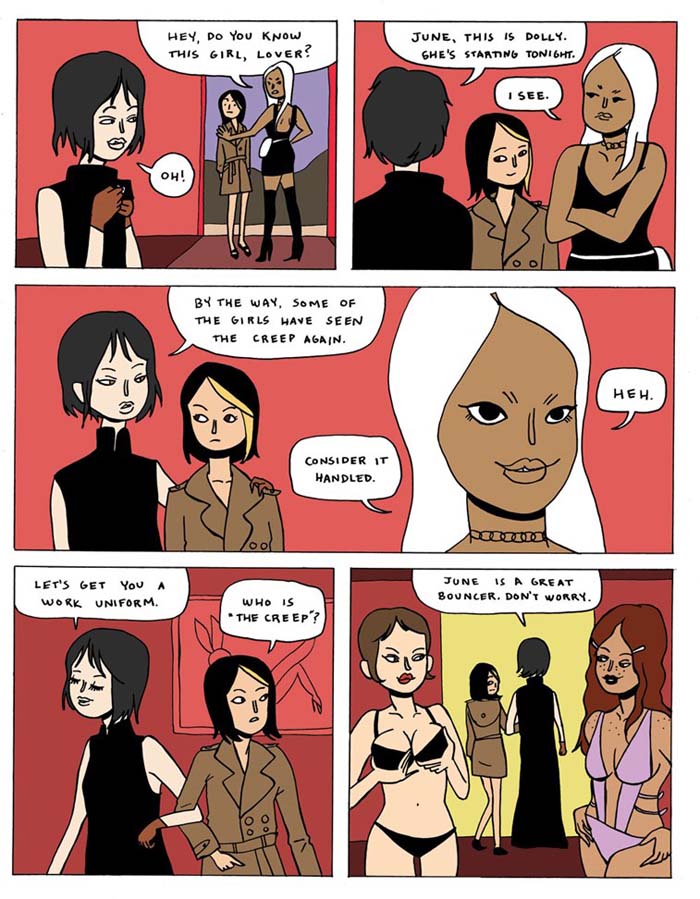
You’ve mentioned that your next comic is going to require something different from you creatively. Without giving too much away, what are you hoping to challenge yourself with next?
I have something written that’s very tight and detail-oriented. It’s also planned as a black-and-white comic. When the atmosphere is gone, when I’m telling just a straight story, what will happen? That’s where my unconscious landed and that’s where I’m headed.
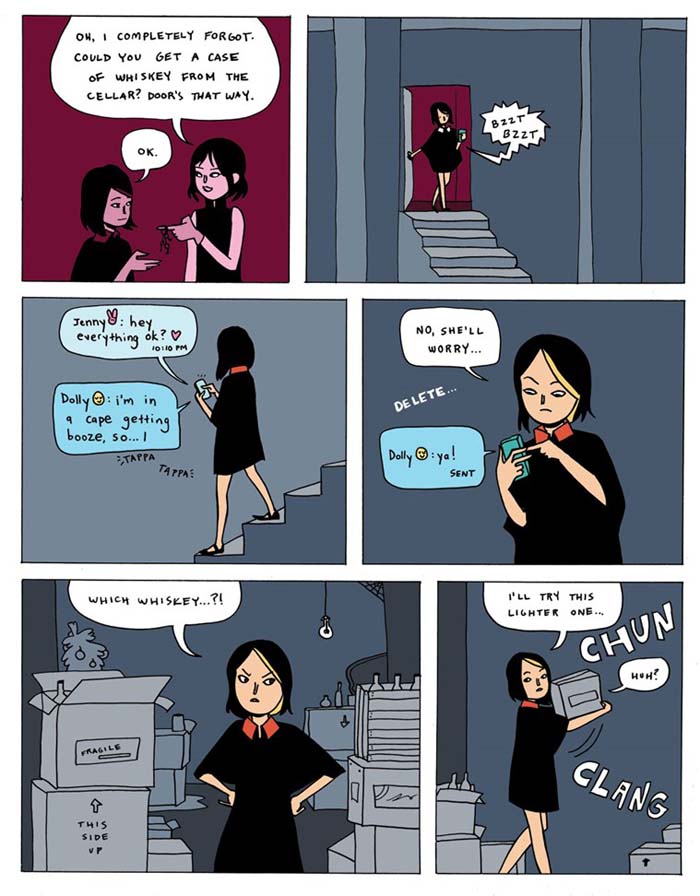
Heaven is available in comic shops and book stores starting today.