
Christian Ward has built a career creating stunning visuals and unforgettable worlds, whether as the artist on books like Invisible Kingdom, Batman: City of Madness, Black Bolt and Spectregraph, or as a writer on Blood Stained Teeth and Machine Gun Wizards.
For his latest project, he’s building a house.
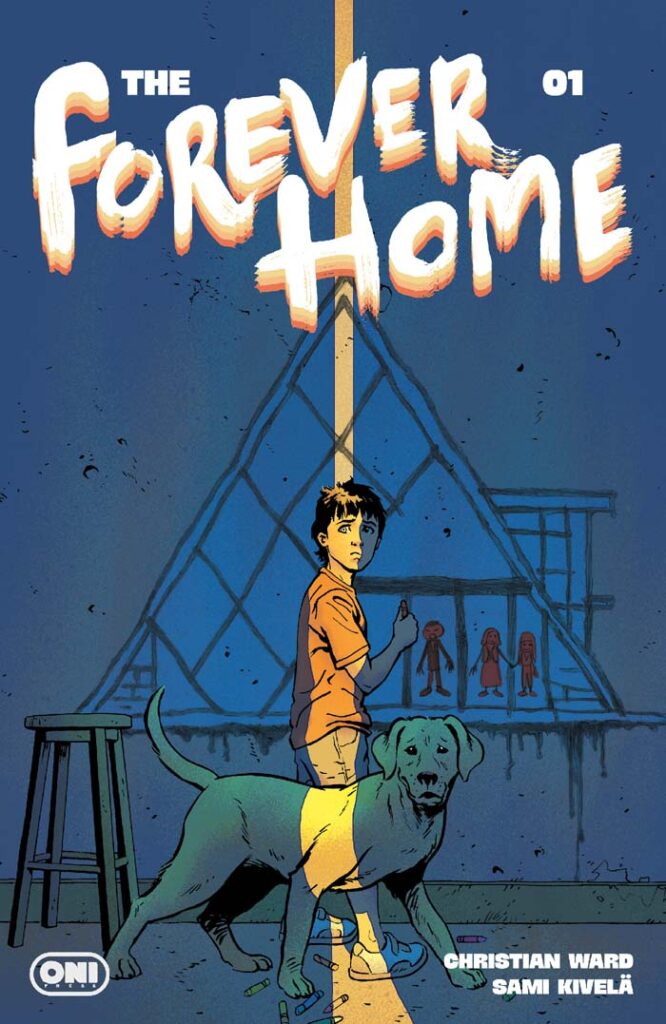
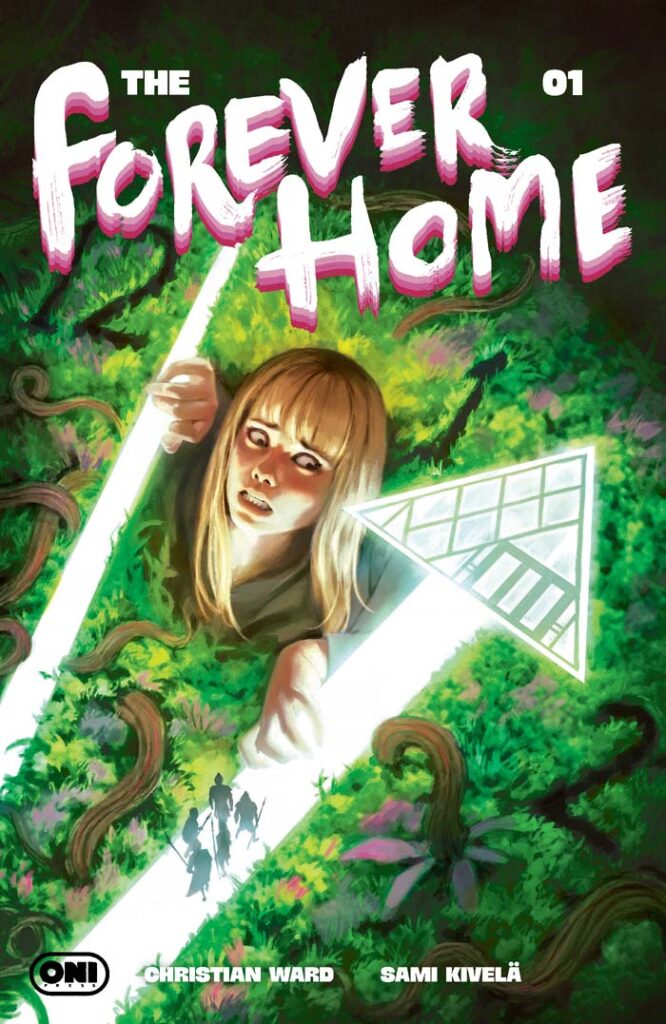
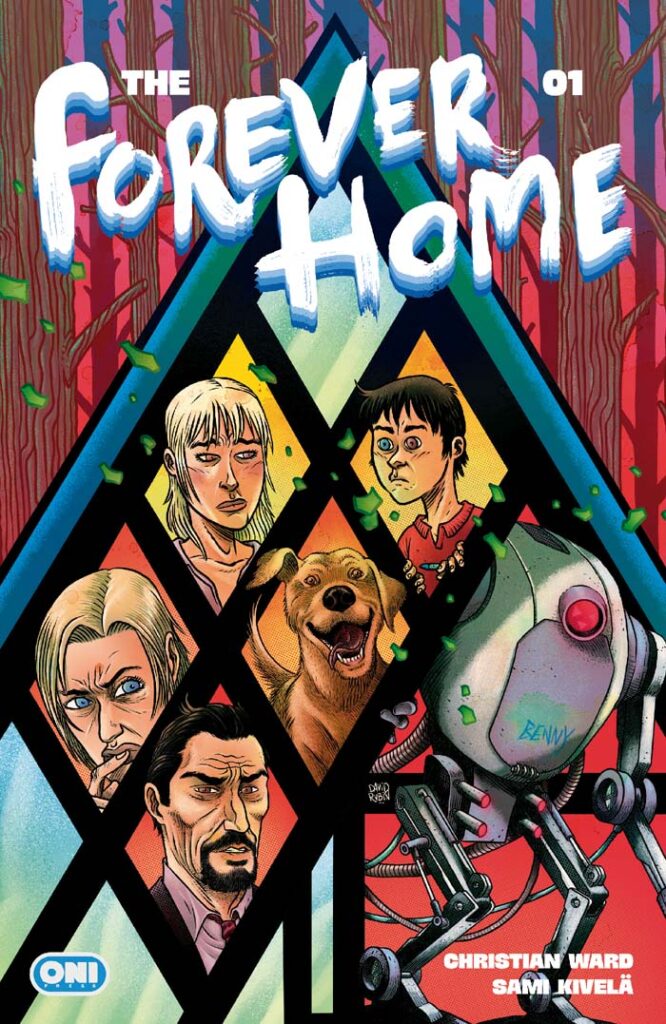
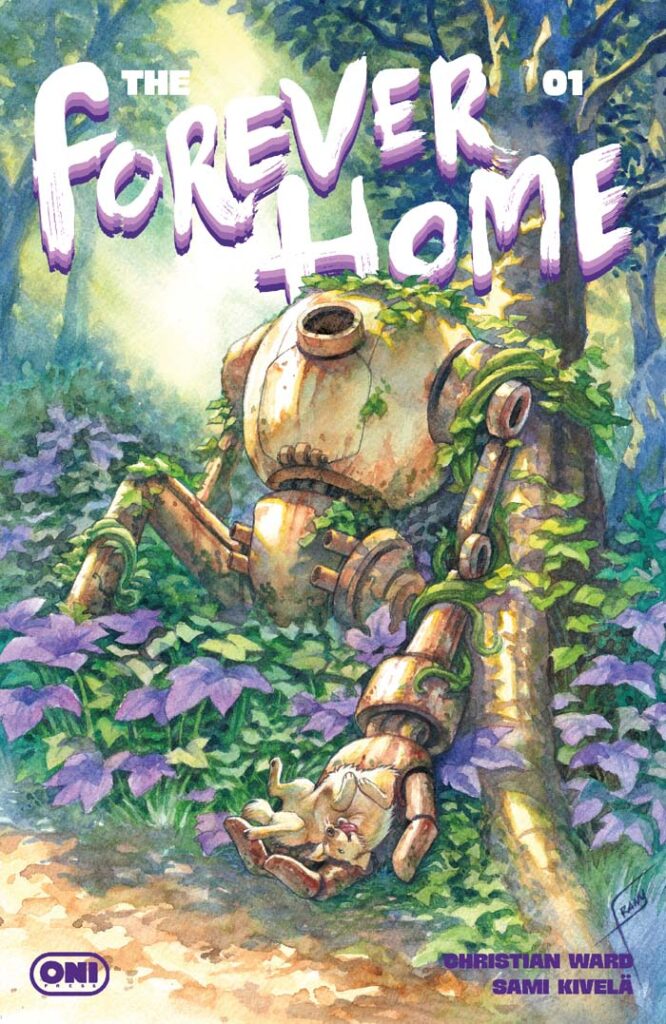
Coming from Oni Press this fall, The Forever Home reunites him with artist Sami Kivelä for a story that blends science fiction, horror and family drama. The series follows Henry D’mour, a man who built a home designed to survive a climate-ravaged future that exists almost outside of time itself. As years, and eventually centuries, pass beyond its walls, the family inside must confront not only the changing world, but the consequences of Henry’s choices and the secrets hidden within the house itself.
I spoke with Ward about the origins of The Forever Home, why he wanted to tell a story inspired by climate change and “billionaire bunker” culture, reuniting with Kivelä and more. My thanks for his time.

I thought I’d start by asking about one of the unique elements of the premise: 20 minutes inside the house equals a year outside. Where did that idea first come from, and how did it evolve into The Forever Home?
I wanted to do a story which was a response in part to climate change and ‘billionaire bunker’ culture, but It was the idea of the house itself that came first. A house built to withstand climate change which was accidentally almost fully immune to time itself. Then who would live in it and the drama grew from there.
The book mixes science fiction, horror and family drama. Did you always see it as all three, or did one genre lead the way as you were developing the series?
I certainly didn’t set out to write a genre-crossing story, I just set out to write this story. First and foremost, and this is true with any story, you start with the characters and then you look at what happens to them within a certain situation or environment (or world) and then what happens when that changes. Every genre element within The Forever Home interacts with another. The world or the premise is science fiction, the family is what keeps that far-fetched reality grounded so that readers can relate to it, and of course the horror is what happens to them in this far flung future.
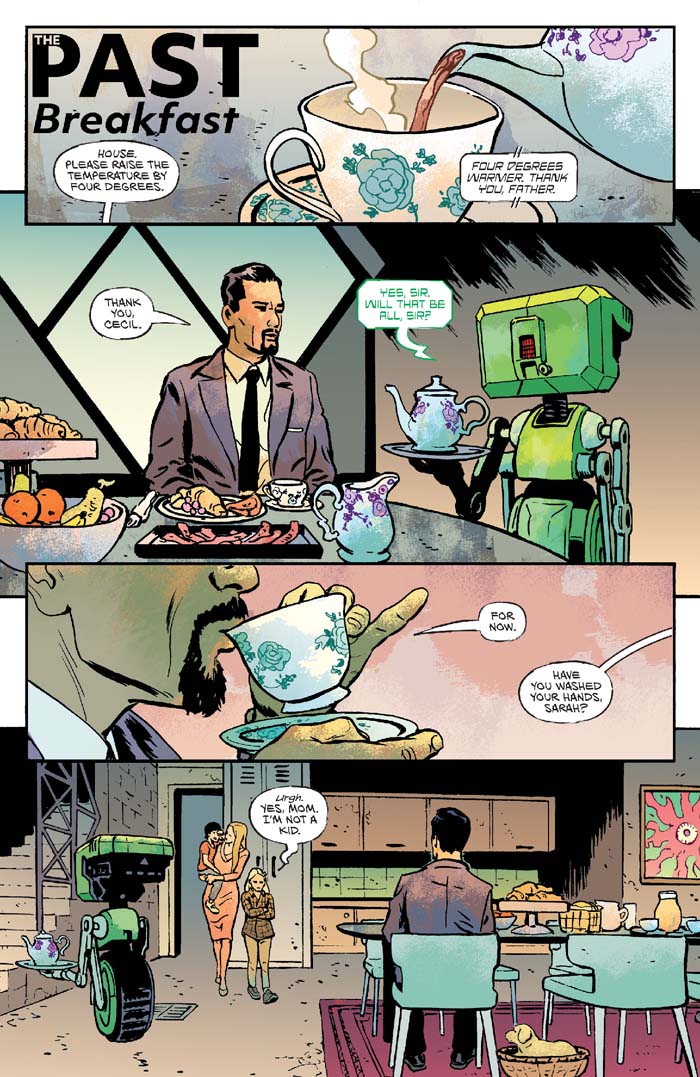
Henry D’mour is introduced as someone who could have saved the world, but chose to save only his family. Was it difficult finding the balance between making him understandable and making him morally indefensible?
I think the key is that even bad people don’t view themselves as a villain. Henry is the villain (or is he?) but in his mind he’s trying to keep his family safe. It was important that he was doing the wrong thing for the right reasons. As we go on we’ll see his morality fall apart, but it was important to me he wasn’t a cartoon villain. In many ways I want readers to question… ’what would I do in this situation?’ And the answer to that question could very well change issue to issue.
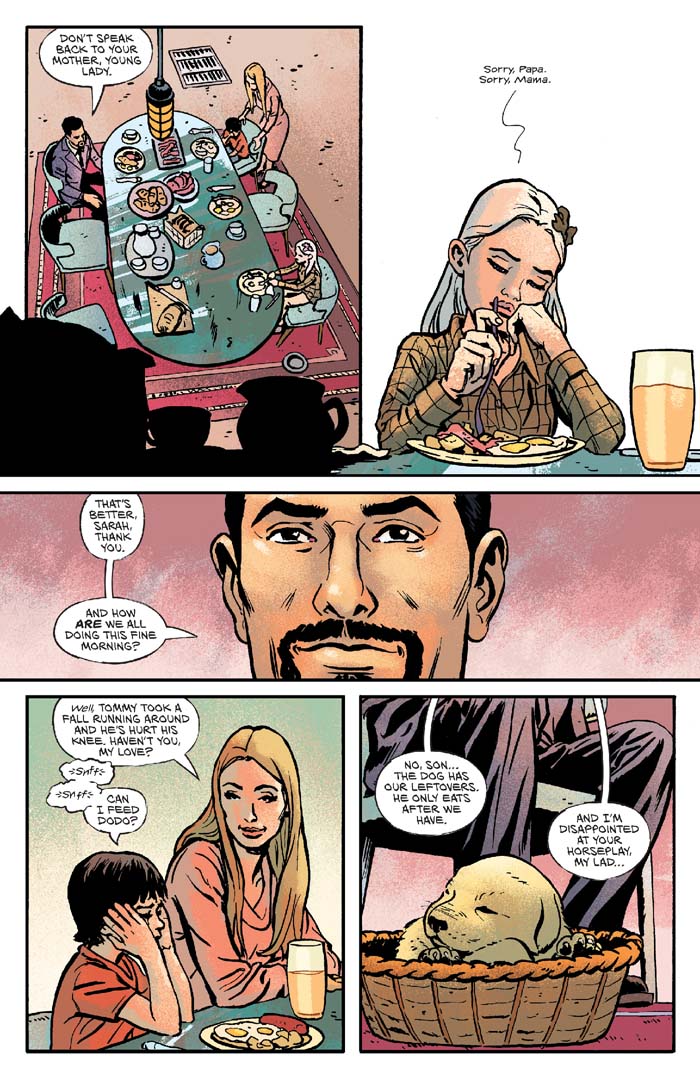
The house is almost a character in its own right. How much time did you and Sami Kivelä spend designing its layout and its “rules” before starting the series?
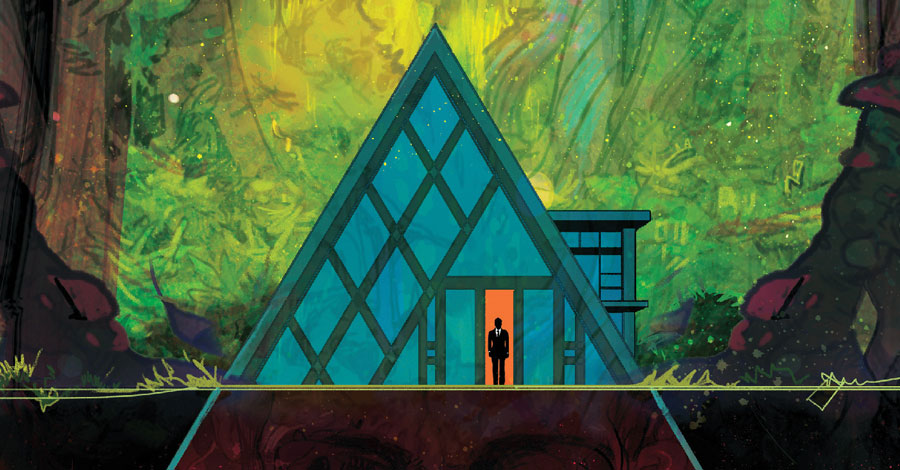
I discussed the functionality of the house and gave Sami the basic layout. I was careful to express the visual influence Mid-Century Futurism had on the house (and in turn its robots) but also the Hansel and Gretel fairy tale vibe of how we might see the house from outside. In many ways it had to look like a picture perfect postcard, typical suburban house. We had a little back and forth but it didn’t take Sami long to nail it.
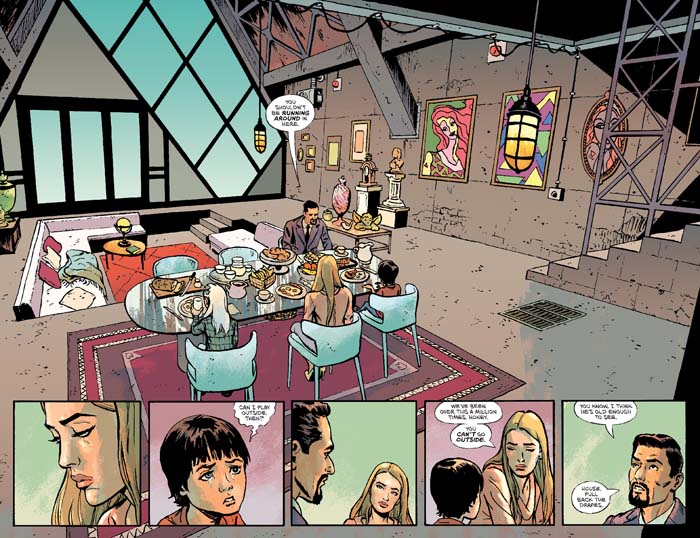
You’ve collaborated with Sami before on Machine Gun Wizards. What made you want to reunite for this project, and how has your creative process changed since your last collaboration?
Simple…Sami is a genius. I think he’s the most underrated comic artist working today. What I love most about working with him is that he always contributes that extra 10% to any script I write. There’s always a surprising spin or inventive page layout or additional panel where he’s heightened the drama and emotion. Add to that that he’s never missed a deadline and he’s the perfect collaborator.
You’ve had acclaimed runs as both an artist and a writer. Does wearing both hats change the way you script for another artist like Sami, compared with writing for yourself?
Honestly, no. Weirdly I write full scripts for myself , so my scripts look the same regardless of whether or not I draw them. I do think being an artist first gives me an advantage in that I’m always conscious of the amount of work I’m asking them to do on everything. I’m always conscious that the ‘artist me’ takes a backseat when another artist is drawing my scripts. I wouldn’t want a writer to step on my toes creatively so it’s very much about giving Sami the room for him to impress and then get out of the way.

What are you most excited for readers to discover as the series unfolds?
The wild swings and the big emotions.
Spectregraph and The Forever Home both revolve around extraordinary houses with their own personalities. Should we assume you have a thing for working on comics about really creepy real estate?
Haha, and yet architecture is my least favourite thing to draw—probably why I asked Sami to draw this scary house book.
2 thoughts on “Smash Pages Q&A | Christian Ward on building ‘The Forever Home’”